
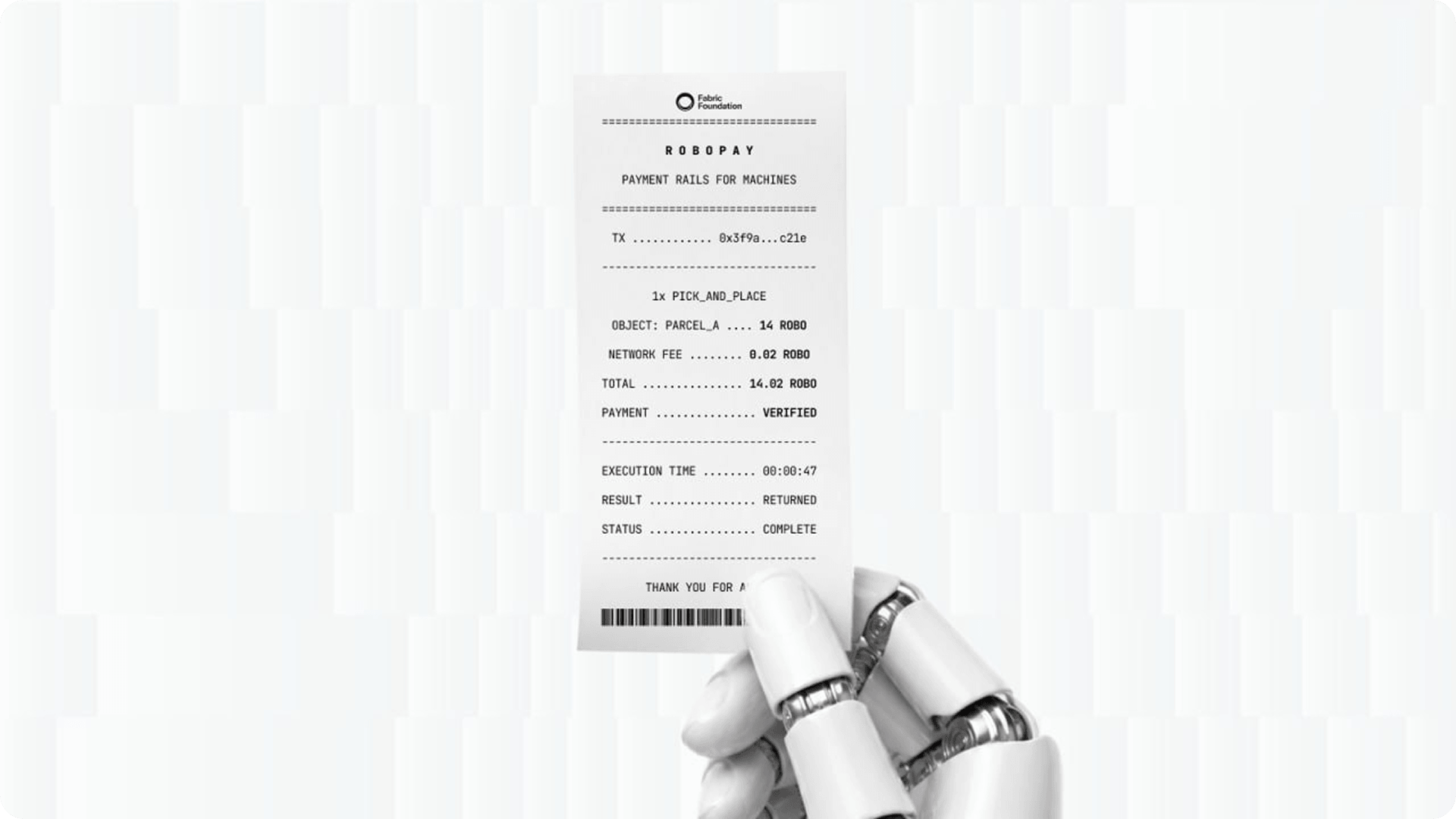
Turning Robot Capabilities into Programmable, Payable Services
Robots are becoming increasingly capable, but most of their capabilities still live inside closed SDKs, local control systems, and one-off integrations. A robot may be able to deliver an item, inspect a site, capture an image, move an object, or perform a task, yet developers still lack a standard way to attach payment to those actions and build applications around them in the autonomous economic activities.
For a machine economy to emerge, robot capabilities must become more than technical functions. They need to become discoverable, callable, payable, and verifiable services.
Today, we are introducing RoboPay, the payment rails for machines.
https://robopay.fabric.foundation/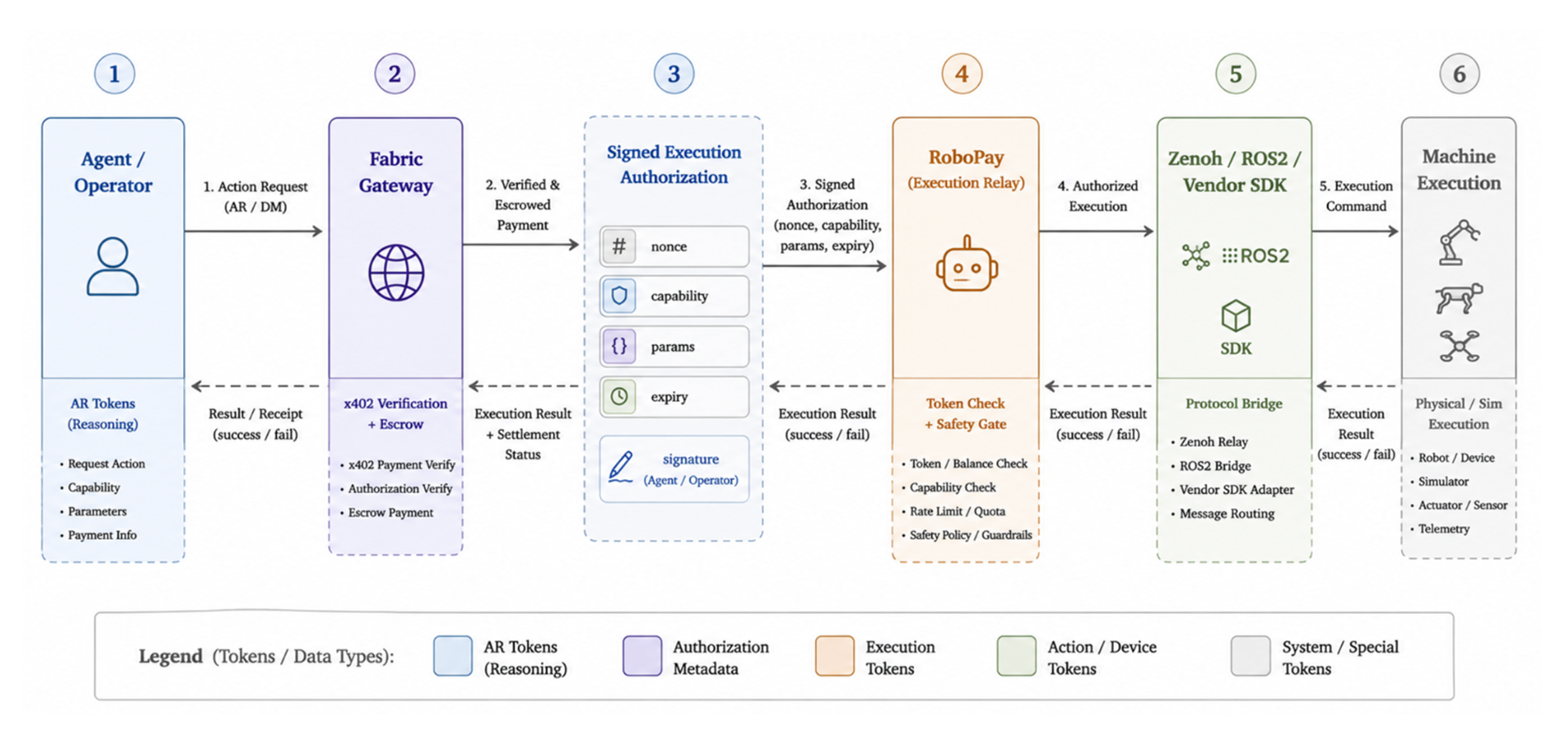
What Is RoboPay?
RoboPay enables developers to expose robot capabilities as paid actions. A developer can define a robot skill, attach pricing and execution rules, receive a payment-authorized request, and return a structured result after the robot completes or rejects the action.
The core model is simple:
Pay for an action. Verify the payment. Execute the task. Return the result.
This pattern, which we call pay-to-actuate, can be used across humanoid robots, robotic arms, mobile robots, drones, cameras, simulators, and other connected machines.
RoboPay is not limited to one type of application or one type of caller. A paid robot action may be triggered by a web application, a marketplace, an enterprise workflow, another machine, or an AI agent. The agent-facing experience is provided separately through the RoboPay Agent Skill, which allows agents to discover the interfaces to robot services, make payments, and request actions. Together, these components form the crucial foundation for the economy with agents, human and machines as the participants.Transparent Pricing
RoboPay is designed to make machine payments predictable and developer-friendly. There are no subscriptions, setup fees, or long-term commitments. Developers only pay when RoboPay is called.
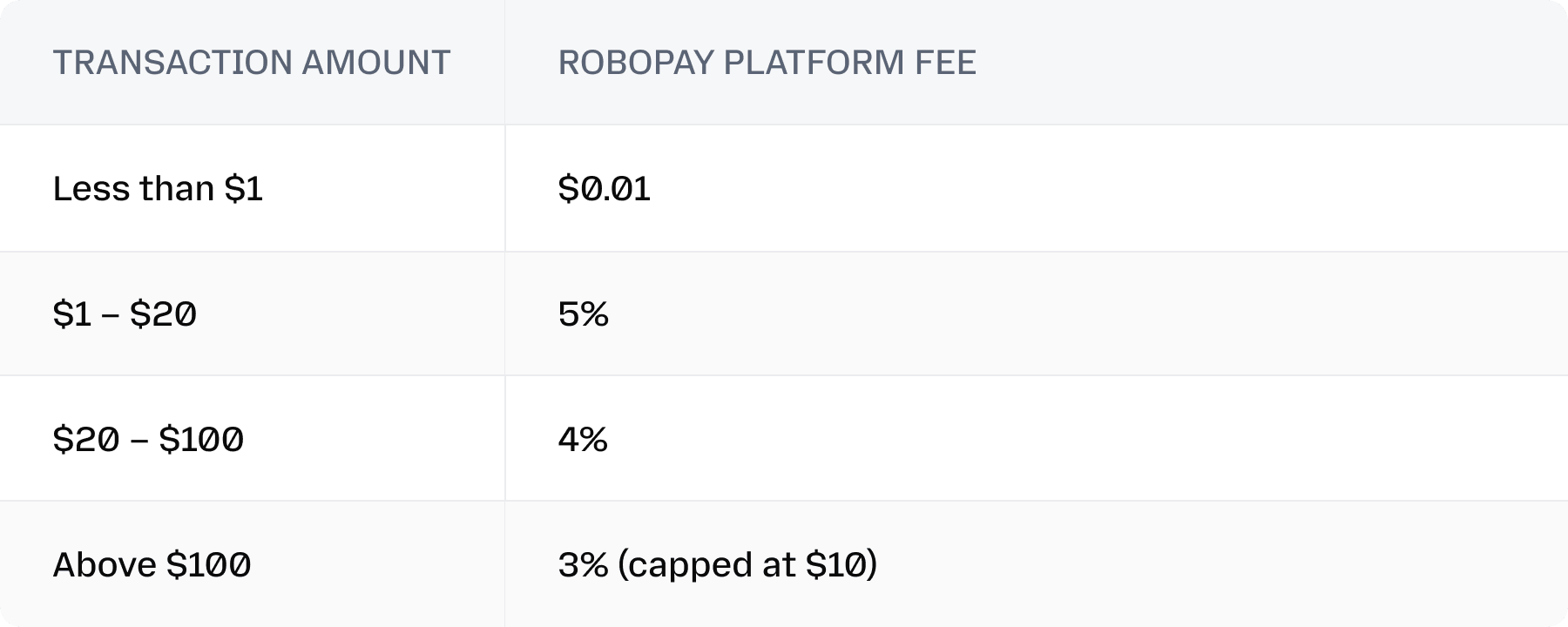
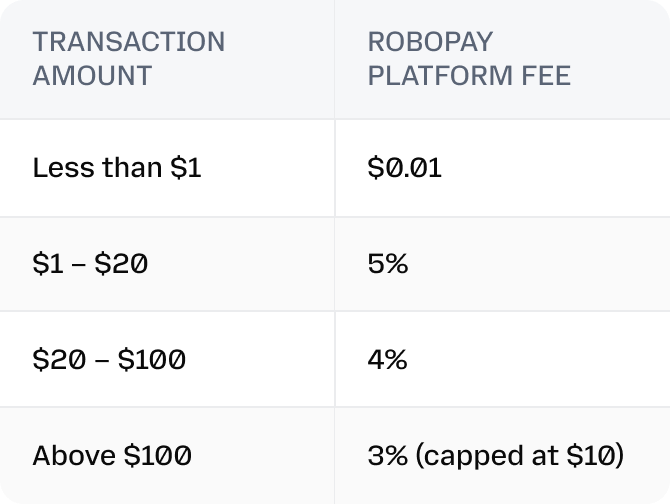
Whether you're tipping a robot after a dance, paying for a delivery, or automating industrial workflows, RoboPay keeps pricing simple, transparent, and aligned with usage.
For enterprise deployments and custom commercial agreements, please contact the Fabric team.Building Applications for the Machine Economy
The opportunity is larger than allowing an AI assistant to control a robot.
A logistics platform could pay a mobile robot per delivery. A property-management application could pay a robot per inspection. A marketplace could allow users to purchase access to a robotic arm by task or by session. A data platform could pay cameras and robots to collect specific observations. A fleet operator could turn unused robot capacity into on-demand services.
In each case, the robot is not merely a piece of hardware. It becomes an economic participant that can offer capabilities, receive requests, perform bounded work, and generate revenue.
RoboPay gives developers the infrastructure to build these applications without designing a new payment and execution flow for every robot integration.Announcing the RoboPay Integration Bounty
To accelerate the ecosystem, we are launching the RoboPay Integration Bounty, a one-month developer program with a total prize pool of 1,000,000 ROBO.
Prize Pool & Tasks
The bounty covers 12 leading robots across humanoids, robotic arms and robot dogs. Each platform offers four progressively more advanced integration tasks, allowing developers to contribute at different levels of complexity.
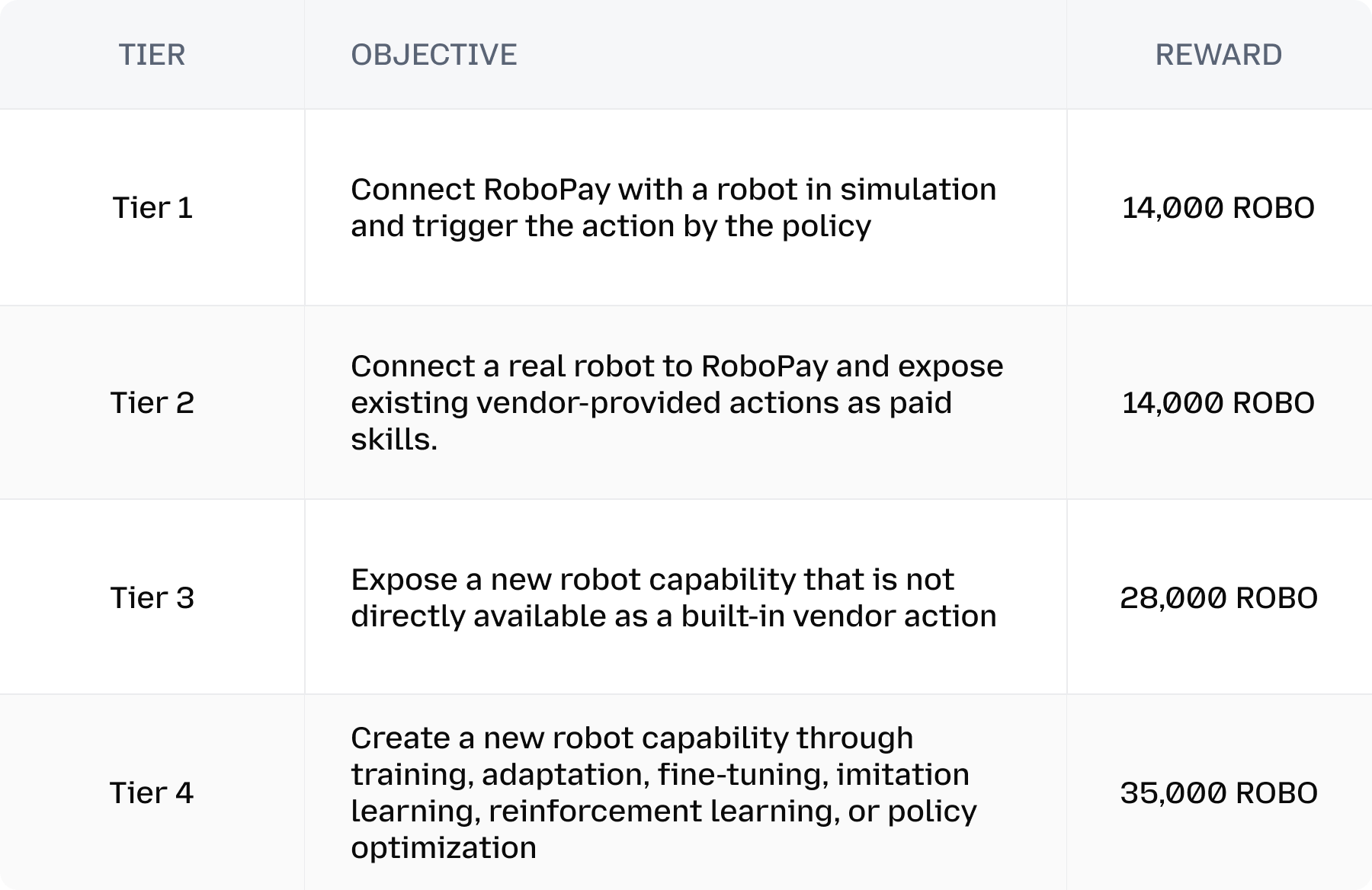
Connect RoboPay with a robot in simulation and trigger the action by the policy
Connect a real robot to RoboPay and expose existing vendor-provided actions as paid skills.
Expose a new robot capability that is not directly available as a built-in vendor action
Create a new robot capability through training, adaptation, fine-tuning, imitation learning, reinforcement learning, or policy optimization
Each robot has its own set of bounty tasks, and rewards are awarded on a first-come, first-served basis. The first qualifying pull request merged for a given task receives the corresponding reward.
Success Criteria
We're looking for production-ready integrations rather than isolated demos.
Every submission must demonstrate a complete pay-to-actuate workflow—from a payment-authorized request, through RoboPay and Zenoh, to successful robot execution and asynchronous result reporting. Integrations must also expose discoverable robot skills with pricing, preserve payment safety, include reproducible documentation, and provide sufficient evidence for reviewers to validate the implementation.
Details: https://github.com/fabricfoundation/RoboPay/wiki
How to Participate
Participating in the bounty is straightforward.
- Choose the Task in the Bounty Marketplace. Choose the Robot model and Tier and click “Apply”
- The website will direct you to the Github page where you submit the PR to join the bounty
- Please read the success criteria before you submit the PR
- Our team will review your submission against the published success criteria.
- Once your pull request is approved and merged, you'll receive the corresponding bounty reward if you're the first successful submission for that task.
Timeline
Program opens: From now
Submission deadline: August 21 2026, 00:00:00, PT timeJoin the Machine Economy
The internet became programmable because developers built on open protocols. We believe robotics will follow the same path.
Every robot integrated with RoboPay becomes another programmable participant in the machine economy. Every contribution expands what developers can build, from AI agents and robotics marketplaces to logistics, automation, and applications that don't exist today.
This bounty is just the beginning. We can't wait to see what you build.